
Caring for ourselves by caring for each other
I believe we can come out of this crisis with a new culture of a caring community. But this is only possible if we invest in self-compassion.

I believe we can come out of this crisis with a new culture of a caring community. But this is only possible if we invest in self-compassion.

Self-compassion does not make you soft. Boundaries do not make you closed off nor selfish. I had to repeat this many times before I started to understand how true and how essential self-compassion and boundaries are in our lives.

Every doctor starts with innocent wonder, but medical training forces an evolutionary shift. Explore the hidden cost of becoming a “shark” in medicine.

Every doctor starts with innocent wonder, but medical training forces an evolutionary shift. Explore the hidden cost of becoming a “shark” in medicine.
Every doctor starts with innocent wonder, but medical training forces an evolutionary shift. Explore the hidden cost of becoming a “shark” in medicine.
Every doctor starts with innocent wonder, but medical training forces an evolutionary shift. Explore the hidden cost of becoming a “shark” in medicine.

While traits like conscientiousness, agreeableness, neuroticism are helpful in being a successful and safe clinician, they can have their downsides.

Physician loneliness is a thing. In Part 2, I look at the lonely physician and systemic (“Them”) factors and solutions.

We humans are wired for connection. Our ancestors evolved as social beings because, simply, working together as a band of humanoids increased their chances of survival and reproduction. Multiple studies have shown that collaboration engenders survival advantage. Yet physician loneliness is a real thing.
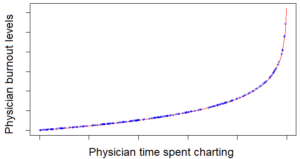
In this article, we look at the connection between charting and physician burnout. We also examine innovations to try and reduce charting-related fatigue and physician burnout.

In this article, we explore the link between the burnout syndrome as it relates to doctors, and the impacts on their physical and mental health.
In this article, we explore the history of the “burnout syndrome” in general and as it relates to physicians specifically. Why is physician burnout history important?

Reach out to your loved ones, and be honest. Trust me, they will help you. You are loved in more ways than you can imagine, because you are one unique lovable bright spot in this world. So stay with us and shine on us. This a Physicians Anonymous co-founder’s story of how she lost a spouse to suicide.
What exactly is physician burnout? In this article, we explore the construct of the burnout syndrome definition as it relates to doctors: a physician burnout definition.

We are not superheroes. We need to navigate the Fine Line Between Appreciation and Realism.
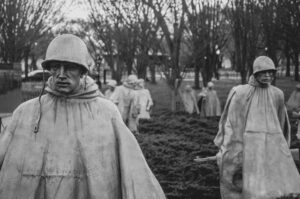
“Front-line”, “battle”, “the trenches”. These terms are all too familiar when talking about modern medicine. Why are we referencing war when we should be talking about healing?
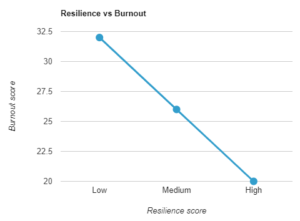
Is there a simple inverse relationship between resilience and burnout? Intuitively, one would think so, but with physicians, it’s never that simple. A recent paper in JAMA Open reveals some startlng findings.

In Part 2, I present the second part of my story: one of physician burnout recovery – how I emerged from the wreckage and rebuilt my life. I sincerely hope that it provides hope for others who are struggling.

If you’ve not heard of Corrigan’s Secret Door, you’re in for a treat. Based on a legendary Irish physician, the Secret Door denotes a metaphorical escape route for busy physicians from their hectic clinics.

My career and life crashed to a halt after 25 years in clinical medicine. I was at one point “suicidal with planning and intent”. Medical knowledge in the hands of a suicidal physician can be deadly. As an affluent, respected physician, confident in my position, well-liked and admired by society, yet suffering inside, why did I not seek help?

In this article, Part 2, I concede that there are some excellent principles differentiating ineffective from effective physician resilience programs. We hope that colleagues and medical leaders designing such programs will find the guidance useful, and further grasp the nettle of addressing the root causes of physician burnout.